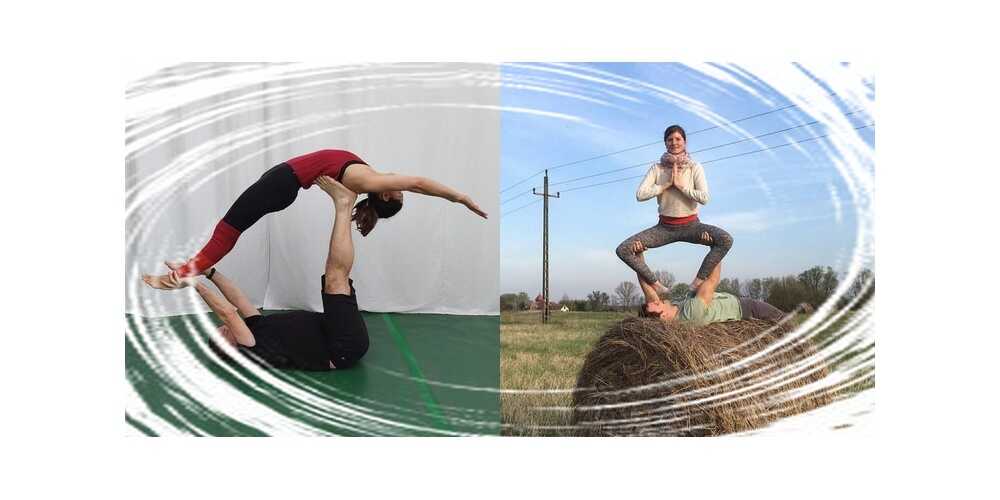
In acroyoga, transitions are the first step toward bringing poses to life through movement. Once you’re able to enter and hold poses with stability, it’s time to start connecting them—and that’s where the flow begins. Some people jump straight into learning sequences, but you’ll soon realize that even if you can manage a whole sequence, there’s always room for improvement. The only way to refine and polish your movement is by working on the transitions—gathering insights, learning what to focus on, and figuring out how to make the flow smoother, lighter, and more effortless.
If transitions are learned incorrectly from the start, they can become ingrained as habits that are much harder to change later on. But if you take the time to study and understand them early, you’re building strong foundations for everything that follows.
Some transitions are shown simply as short video clips, while others include teacher commentary that highlights important details—for both flyer and base. These videos are worth studying carefully, as they offer valuable guidance.
Each transition is labeled with its starting and ending pose. Some include an intermediate shape that’s useful to notice for its subtle details. If you’re struggling with a transition, it may be worth returning to the poses themselves and strengthening those first.
We also indicate which flow or washing machine includes each transition, so you can see how the pieces come together in context.
There are transitions where multiple pathways exist between two poses—some with a step, a pop, or a change in direction. These options give you creative freedom when building your own sequences, allowing you to choose the path that best suits your style or the moment.
This collection is continuously growing, so we invite you to check back now and then—you might discover something new!
Transitions are not just technical connectors—they’re where the true art of acroyoga begins. This is where expression, creativity, and connection take form. A well-executed transition is like a graceful move in dance—it strengthens not only your body, but also the partnership. When practicing, take time to explore the balance points and to move as one. That’s where the real flow lives.
Transitions from Bird
Many transitions begin from bird pose—whether it’s front bird, reverse bird, or bird in hands. Since bird is one of the core foundational positions, these are often the first transitions that beginners explore.
The simplest transitions are the ones where the flyer stays directly above the base, moving symmetrically along the base’s central axis. These are the best to start with. They help build trust, establish a shared sense of timing, and create the first real experience of flowing together.
We recommend starting with beginner flows and introductory sequences that include these basic transitions. They offer a solid foundation for everything that comes next.
From Front bird
From Bird to Needle
Although this transition looks simple at first glance, it requires much more precision than it appears. The base gently tips …
From Bird to Reverse Low Foot to Hand
The base initiates the transition by bending his supporting leg, creating a gentle tip that sends the flyer into a …
From Bird to Reverse Star
Tutorial video with Super Dave https://www.youtube.com/watch?v=vccFNDI6y74 From Bird to Reverse Star and back to Bird Partner Acrobacics https://www.youtube.com/watch?v=RQ_Vb_z5QOY Used Poses …
From Reverse Front Bird
From Reverse Bird to Star
The flyer turns in from the front to step onto the base’s foot and enter star pose. Since the sequence …
From Reverse Bird to Straddle Bat
We usually don’t enter bat pose directly from the ground — it’s almost always reached through a transition from another …
From Reverse Bird to Foot2Forearm
The flyer starts tilting with a straight body, the base fits his forearm to the flyer’s foot and helps the …
From Back Bird
From Back Bird to L-Sit
ou can attempt this transition once you can hold the L-sit pose steadily. If it doesn’t work at first, keep …
From One-Legged Back Bird to Outside Star
An interesting transition can be seen in the Rotisserie washing machine. Koala Singularity with AcrobatIvo https://www.youtube.com/watch?v=RaOI1OzD0oQ A single quick step …
From One-Legged Back Bird to Reverse Inside Star
This transition is a characteristic element of the “Eucalyptus Leap” washing machine.The path forward consists of two steps: Reverse Inside …
From reverse Back Bird
From Reverse Back Bird to Knee2Hand (Maria)
The base initiates the transition by gently tipping the flyer. As the movement begins, the flyer bends her knees while …
From Reverse Back Bird to Shoulderstand with Forearm holds
If you’re looking for something beyond the usual transitions, this one is well worth exploring. It’s an uncommon movement that …
From Reverse Back Bird to Reverse Low Foot-2-hand
In this transition, the flyer behaves like a plank.The base grabs the flyer’s foot and pulls it toward the ground, …
From Handbird
From Handbird to Reverse inside star
The rotation from HandBird into Reverse inSide Star is a complex and exciting movement. A similar transition appears in the …
From Reverse Bird on Hands to Back Bird
This is a rare but eye-catching transition that is well worth exploring. If you’re looking to surprise your training partners …
From Reverse Back Bird on Hands to Pike Throne
The base brings his legs above his head, under the flyer’s bottom. Meanwhile, his sacrum rises. The foot of the …
Transitions from Throne
Transitions from throne poses form an important foundation for acroyoga movement flows.
The flyer’s task is to keep their upper body upright at all times, reaching upward through the crown of the head, as if trying to grow taller. It’s also crucial for the flyer to stay focused on the target pose throughout the movement, continually working toward reaching it.
Since during transitions the flyer’s full weight often rests on one leg of the base, the base needs a high level of focus, strength, and stability. For this reason, we strongly recommend practicing with a spotter until the transitions feel safe and controlled.
The transitions starting from throne poses are grouped according to the type of throne: facing or reversed throne, throne on hands or on feet, and a few other unique throne variations.
Practicing these transitions not only develops technical skills but also deepens the experience of shared flow between partners.
From Classic Throne
From Pike Throne to Front Bird (with pop)
If we want to enter bird from throne with a pop (a throw using hand contact), the movement starts from …
From Throne to Reverse Low Foot2hand
The easiest way to enter this pose is from throne. The base holds the flyer’s feet and brings their elbows …
From Throne back to Handstand
A unique way to dismount from the throne position—going backward through a handstand. The base maintains a firm grip on …
From Straddle Throne
From Straddle Throne to Croc
The videos showcase two equally effective approaches to this transition. In the first, the base and the flyer connect by …
Throne Rotations
There are many different ways to spin in throne. So how should we think about these in this system?Some of …
From Straddle Throne to Star
Basic element of the Rubik’s cube, intermediate transition. The flyer leans forward, crosses her arms and unlocks one leg. She …
From Reverse Straddle Throne
From Reverse Straddle Throne to Biceps Stand in Hands
This transition is one of the signature highlights of the Peacock Tumble — a rare gem you won’t often see …
From Reverse Straddle Throne to Straddle Bat
This is a rarely used transition — we more often use the reversed version (from straddle bat to reverse straddle …
From Reverse Straddle Throne to Reverse Star
A rarely used transition, and a key element of the washing machine called Rubicon. If you’re looking for a challenge, …
From Straddle Throne on Hands
From Straddle Throne on hands to Reverse Star
This transition requires strength and flexibility from both base and flyer. From Hand-to-Hand Throne, the flyer smoothly presses up into …
From Straddle Throne on Hands to Classic Throne
Flyer lifts her hips up, and the base enters under her buttock, grasping the sole of the flyer with his …
From Reverse Straddle Throne on Hands
From Reverse Straddle Throne on Hands to Straddle Throne
This is an exciting transition — and a rare one! I’m not even sure why it doesn’t show up more …
From Reverse Straddle Throne on Hands to Back Bird
The base begins to extend the flyer away while bringing their legs around the outside and stepping into the flyer’s …
From Reverse Straddle Throne on Hands to Jedibox
Flyer grabs the sole of the base and pulls herself up, while unlocking her legs and standing in the palm …
From Other Throne variations
From One-legged Goofy Throne to Outside Star
A simple transition where the flyer rotates 90° from vertical to horizontal, holding a straddle shape with arms outstretched. The …
Fom One-legged Goofy Throne to Reverse Inside Star
This is a fairly specific transition, characteristic of the Biglemoi washing machine — that’s where we first encountered it. Several …
Goofy Throne Tic toc
A tic-toc rhythm between the left and right versions of One-legged Goofy Throne. Here, the flyer stays still and simply holds …
From Z-throne to Straddle Throne
The flyer locks the leg that is on the base’s leg and faces the base. They lift the other leg …
Transitions from Shoulderstand
Shoulderstands are inverted balancing poses that require a solid foundation and stable control before attempting any transitions from them.
Before working on these movements, it’s essential to ensure that both the base and the flyer can hold the shoulderstand confidently and securely.
Because this position involves inverted balance, it is highly recommended to have a spotter during practice—especially in the beginning—until the transitions feel safe and smooth.
Take your time to build a strong, reliable base, and always prioritize good technique and communication.
Mastering transitions from shoulderstands opens the door to beautiful, flowing sequences and a deeper trust between partners.
From Shoulderstand on Hands
From Needle to Reverse Back Bird
At first glance, this transition looks very similar to the familiar movement from a hand-supported Shoulder Stand into a Reverse …
From Shoulderstand with Ankle grip to Hanging Bird
I haven’t seen this transition used in any sequences before, so we decided to create our own video of it. …
From Shoulderstand to Shin-2-Foot
The flyer tucks their legs and places their knees onto the base’s feet. If the entry starts from the ankle-grip …
From Reverse Shoulderstand on Hands
From Reverse Shoulderstand to Reverse Straddle Throne
A transition is often more than a single movement. The same starting and ending poses can be connected in several …
From Reverse Shoulderstand to Straddle bat
This transition is very simple: the base steps in toward the flyer’s thighs, effectively “placing” the flyer into the bat …
From Shoulderstand on Feet
Reverse Star Variation
This is a unique variation of the Reverse Star. The base takes one leg out from under the flyer’s shoulder. …
Slacker Cycle
This washing machine revolves around a unique vertical rotation built from an unusual Reverse Star variation.From the starting position, the …
Gemini washing machine
This 2-base, 1-flyer washing machine offers a unique challenge by combining a dynamic transfer with a complete change in body …
From Reverse Star
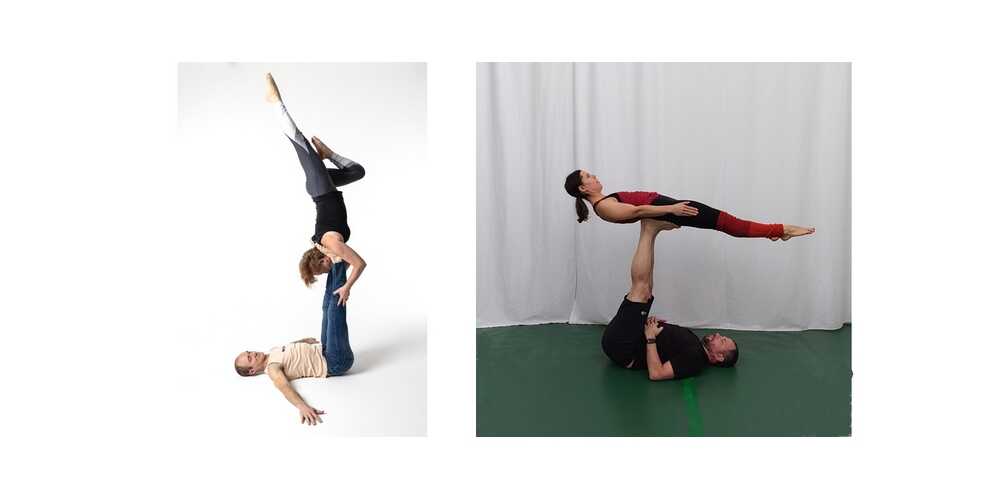
From Reverse Star to Reverse Back Bird
The transition begins in a Reverse Star, with the base and the flyer maintaining a secure hand-to-hand connection throughout the movement.As the flyer leans backward …

Goofy Reverse Star pop
The Reverse Goofy Star is far from a beginner’s pose. It is supported on a single foot, with the base’s leg crossing beneath the flyer’s …
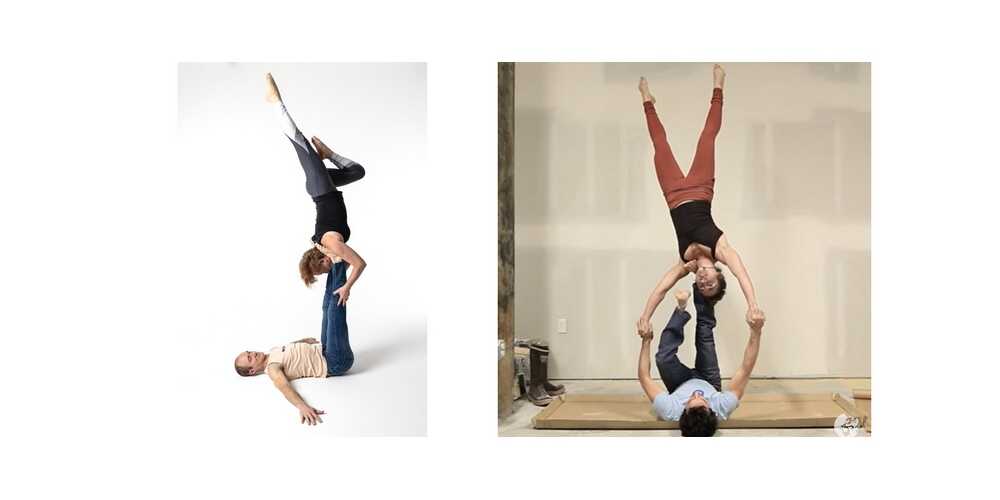
From Reverse Star to Goofy Star
The transition begins in a Reverse Star. The flyer releases the base’s foot and establishes a hand-to-hand connection, while the base initiates the rotation.As the …
Transitions from Foot, Shin, Hand
From Shin to Foot, from Foot to Shin, From Foot to Hand, and other Foot, Shin, Hand variations
From Foot-to-Shin
From Foot-2-Shin to Bird: Step and Pop
There are two ways to transition from Foot to Shin to Bird: with a step or with a pop.It’s best …
From Foot-2-Shin to Classic throne
This is an exciting transition! During the entire process, the flyer can only trust that the base sole is there, …
From Foot-2-Shin to Shin-2-Foot
The base and the flyer hold each other’s hands. The flyer lifts one leg so that their shin is horizontal, …
From Shin-to-Foot
From Shin2Foot to Biceps Stand
Flyer reaches forward and grabs the base’s hand. She steps on the back thigh of the base, fits her arm …
From Shin-2-Foot to Bird : Step and pop
There are different ways to transition from one pose to another, depending on your level of experience.Beginners can use a …
From Shin-to-Foot to Shoulderstand with Ankle holds
Flyer lowers her hips and upper body and grabs the base’s ankle. Base bends his legs so he can reach …
From Low Foot-to-Hand
From Low Foot-to-Hand to High Foot-to-Hand
From low to high foot-to-hand — a transition that blends raw power with precise balance. A true test of strength …
From High Foot-to-Hand to Reverse Straddle Throne
Transition for those who can hold a solid high Foot-to-Hand:The base brings their legs forward between the flyer’s legs, allowing …
From Low Foot-2-Hand to Reverse Straddle Throne
This is a commonly used transition; we often see it in beginner sequences. It’s worth learning and practicing. Base moves …
From High Foot-to-Hand
From Reverse Low Foot-to-Hand
From Reverse Low Foot2Hand to Reverse Back Bird
The base initiates the transition by bringing his legs between the flyer’s legs and placing his toes on her sit …
From Reverse Low Foot-2-hand to Bird
This is a basic transition between two fundamental poses. It’s a simple movement, yet it’s worth paying attention to the …
From Reverse High Foot-to-Hand
From Other Foot Shin Hand variations
From Knee2Hand to Reverse Star
From the Knee-to-Hand position, the flyer leans forward and takes hold of the base’s legs, bringing her shoulders into contact …
From Foot-2-Forearm to Reverse Straddle Throne
This is a rarely used transition, which makes it special. If you want to learn as many moves as possible, …
From Reverese one-legged Shin2foot to Star
This is the fourth step of the 4-Step Reverse Washing Machine. With a strong hand grip, the starting pose is …