

Front plank, bird – the first step
Before you start practicing, it’s worth looking at what you need to pay attention to when taking the plank pose. The photos, descriptions and videos …

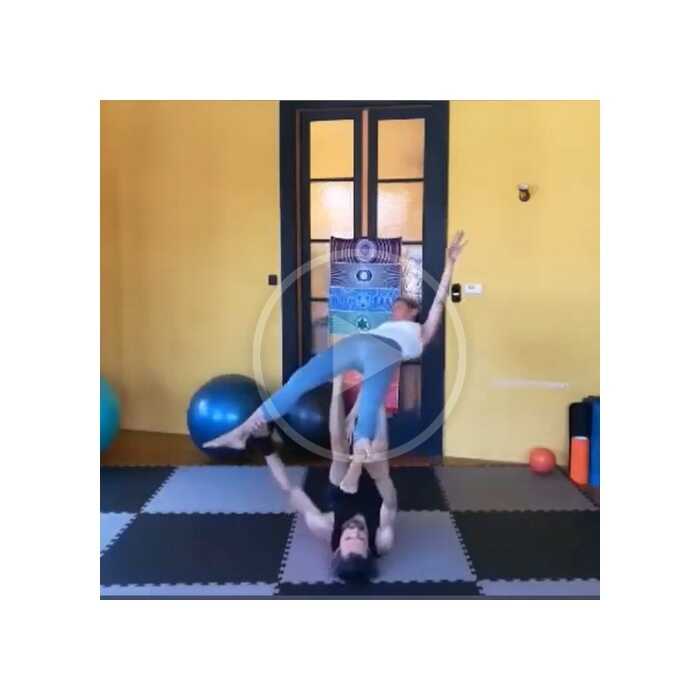
Reverse Inside Star
Base and flyer are in a perpendicular position, the flyer’s upper body is facing the base’s free leg, her face is with her back to …

High flying whale
High flying whale: One of the first poses encountered by a beginner acro-yoga practitioner. Base’s sole is at the flyer’s shoulder blade, while the base …

From Bird to Reverse inside star
This is a common transition that appears in many sequences, especially when moving from one side star to the other through bird. We demonstrate the …

From Reverse inside Star to High flying Whale
The base rotates the flyer in the inside star position. When the flyer is perpendicular to the base, he places his sole against the flyer’s …

From High Flying Whale to Reverse Inside Star
This transition doesn’t appear very often in sequences, but I still think it’s worth learning. There are similar, more advanced moves that will likely feel …

From Reverse Inside Star to Front Bird
This is a simple and smooth transition where the flyer rotates from side star into bird, landing gently on the base’s foot. Side Star Tutorial …

From Front Bird to High Flying Whale
This is actually a compound move: the transition starts from bird, passes through reverse inside star, and ends in high flying whale. So it’s really …

From High Flying Whale to Bird
The flyer rotates from Whale into Bird, passing through Side Star. This link can also be understood as two separate transitions: Whale → Side Star …